
Brandbook
Brandbook: what is it and how does it differ from a graphic standards manual?
Branding and identity

A brandbook and a graphic standards manual are often mentioned as if they are the exact same thing. They are not. A brandbook describes who the brand is, who it speaks to, and how it sounds, while a standards manual prescribes how the brand looks and how its visual elements are technically used. Whoever mixes them up can easily pay for a document they don't need or end up without the one they do.
In this text, I explain what a brandbook contains, how it differs from a standards manual, how to assess what you need, and how to create a brandbook in five steps.
What is a brandbook?
A brandbook (or brand book) is a document that defines the identity of a brand: why it exists, who it addresses, how it differs from others, and what tone it uses to communicate. Visual rules are a part of it, but they are not its essence. The essence is the strategic layer, meaning the answers to questions that design alone cannot solve.
That is why a brandbook is not read only by designers. It is also used by copywriters, social media managers, customer support, and sales teams. To all of them, it gives the same answer to the question "how would our brand say or do this".
What does a brandbook contain?
The scope depends on the size of the company, but a good brandbook always covers the following five areas.
Mission, vision, and values
The mission states why the brand exists, the vision where it wants to go, and the values what it believes in. This part is only valuable if it is specific. "Quality and commitment to the client" can be written by any company, so such a sentence does not help anyone. A useful value is one that shows a decision, for example: "We would rather reject a job than promise a deadline we cannot meet."
Target audience
A clear description of the people you are addressing: who they are, what they need, what they fear when buying, and in what words they describe their problem. Two to three briefly described customer groups are more useful than a single general formulation like "everyone from 25 to 55 years old."
Positioning
Positioning answers the question of why someone would choose you over a competitor. It is best when it fits into a single sentence: who you are for, what you offer, and how you are different. From that sentence, website headlines, profile descriptions, and sales messages are later created.
Tone and style of communication
A brand should sound the same on Instagram, on the website, and in response to a complaint. Describe the tone with three to four adjectives (for example: direct, warm, professional without jargon) and provide an example of a sentence you would write and one you wouldn't for each. Also decide on practical things: do you address customers as "you" (formal or informal), do you use foreign terms, and how do you write prices and dates.
Visual identity in basic outlines
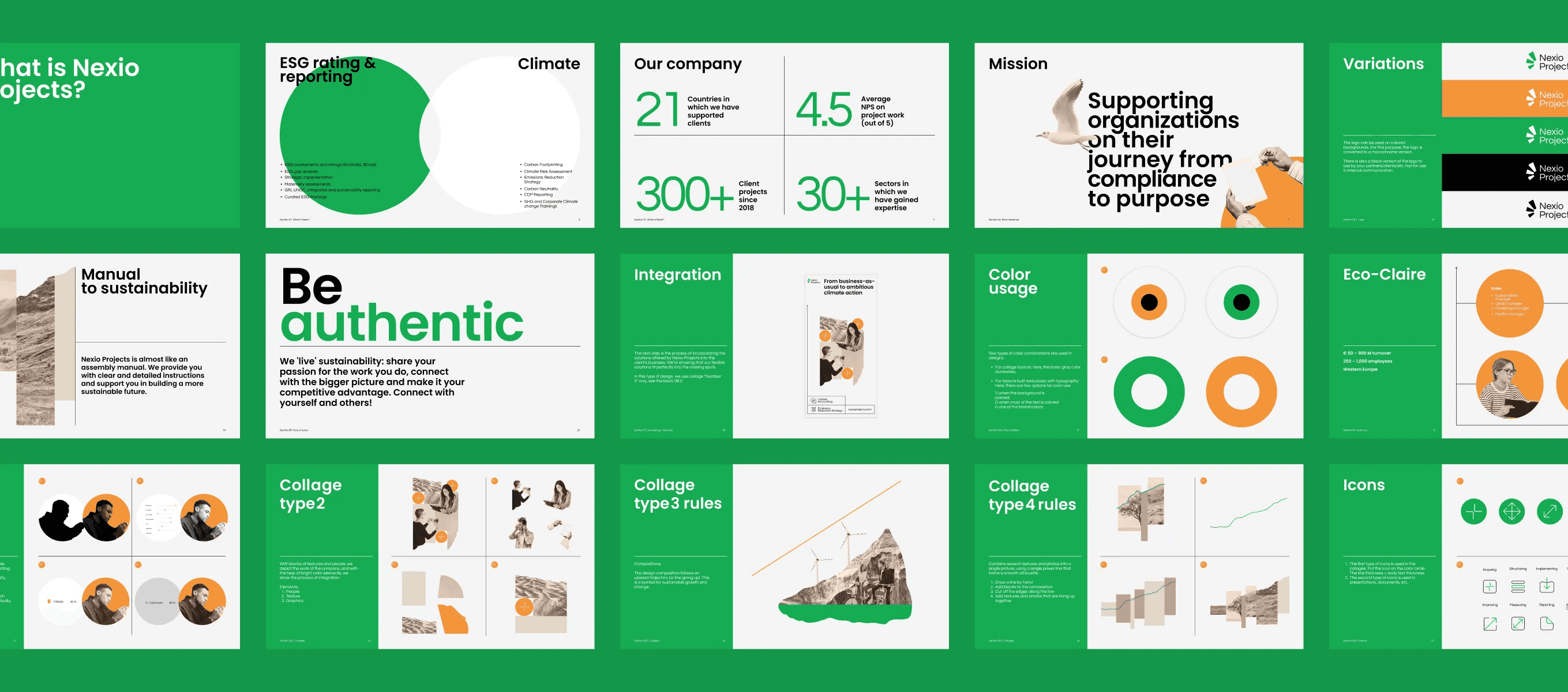
A brandbook also contains an overview of the visual identity: the logo and its variants, color palette, typography, photography style, and a few examples of application. The goal here is to show how the visual part stems from the strategy. Detailed technical rules belong in the standards manual.
What is a graphic standards manual?
A graphic standards manual is a technical manual for visual identity: it prescribes variants and the exclusion zone of the logo, exact color values, fonts, photography style, and examples of correct and incorrect use. What it should contain and how it is made is something I described in a separate text about what a graphic standards manual is.
Brandbook or standards manual: what do you actually need?
In short: a brandbook answers the questions "who are we and how do we speak", and a standards manual answers the question "what do we look like and how exactly is that applied". The differences are easiest to see side-by-side.
Question | Brandbook | Graphic standards manual |
|---|---|---|
What it deals with | Strategy, messages, and tone, along with an overview of the visual identity | Visual system and technical rules of application |
Who uses it | Owner, marketing, sales, copywriters, designers | Designers, print shops, agencies, contractors |
What it answers | Who we address, what we promise, how we sound | Which logo, which color, which font, on which background |
When it is created | Before the design or alongside it | During and immediately after creating the visual identity |
What happens without it | Messages differ from channel to channel | Materials look as if they come from different companies |
In practice, these two documents are often merged into one, where the standards manual is a chapter of the brandbook. Which of these you need depends on the situation you are in.
You are just starting a business and running communications yourself: a strategic part on two to three pages and a short standards manual with the logo, colors, and fonts are enough.
You have a logo and colors, but every piece of material looks different: you need a standards manual.
You are visually consistent, but your posts, website, and offers sound as if they are written by three different companies: you need the strategic part of the brandbook, primarily the positioning and tone.
You work with multiple collaborators or agencies, or you are planning a rebranding: the entire brandbook with the standards manual as a chapter is worth it.
Why the strategic part should not be skipped
The most common situation I see is a company that has a neat logo and color palette, but doesn't have a single written sentence about who it is addressing. Design then solves the wrong problem: the materials are consistent, but the message on them changes from post to post.
The strategic part brings three practical benefits. Decisions are made faster because there is a benchmark against which a proposal is accepted or rejected. A new collaborator or agency gets into the business without weeks of explanation. And the brief for every subsequent project, from a website to a campaign, is pre-written in its most important part.
How to make a brandbook in five steps
If you are starting from scratch, it is safest to hire a branding expert. Still, even when you hand the job over to someone else, it is useful to understand the steps, as you will participate the most in the first two.
1. Define brand values and messages
Start with questions only you have the answer to:
Why did you start this business and what do you want it to become in five years?
Who are your best customers and what problem do you solve for them?
Why did they choose you instead of the competition?
What would you never do just to get a job?
Write down the answers in your own words, without empty cliches. If you can, ask a few existing customers why they chose you. Their answers often differ from what you assume.
2. Determine the tone of communication
Take a few texts you have already published (a website page, three posts, an email to a customer) and highlight what sounds like you and what does not. From this, derive tone rules and examples of "we write like this, we do not write like this". This step is most often skipped, yet it is exactly what distinguishes a brandbook from a standards manual.
3. Develop the visual identity
Only now is it time for the logo, colors, typography, and photography style. A designer who has answers from the first two steps doesn't have to guess, so proposals hit the mark faster, and there are fewer rounds of revisions. If you need help with this part, take a look at how I do brandbook creation and standards manuals.
4. Write down the guidelines clearly and with examples
A brandbook should be usable, not an essay. Write briefly and give an example with every rule: what a good post looks like, what a good headline sounds like, what an email signature looks like. Test the document by giving it to someone who doesn't know your brand and asking them to create a single post. If they have to call you with questions, the guidelines should be expanded in those places.
5. Adapt the format to the people who use it
Nobody opens a document that is hard to find. Therefore, I recommend:
A PDF version that is easily sent to external collaborators,
An internal online version (Google Docs, Notion, or Figma) that is easy to update,
If needed, short excerpts for specific tasks, for example, a "social media guide" on one page.
For daily posts made by your team, Canva for digital marketing can help a lot, provided that the Brand Kit is properly set up inside it with colors, fonts, and the logo from the brandbook.
How often should a brandbook be reviewed?
A brand changes: new products, new audiences, and new channels emerge. People stop opening a brandbook that doesn't keep up. In my practice, the following rhythm works well:
Assign one person to be in charge of the document, to whom questions and suggestions are sent.
Review it every 6 to 12 months, and always when introducing a new service, entering a new market, or opening a new channel.
Note situations where the document did not provide an answer, and add them to the next version.
Mark the version and date on the first page so everyone knows which one is valid.
During review, the strategic part usually requires minor changes, while the application examples change the most. If it turns out that neither the audience nor the positioning are valid anymore, it's a sign that it is time for rebranding, not for a new version of the document.
Where to start
Branding without written rules is like a city without streets: everyone goes their own way. A brandbook gives direction to messages, and a standards manual to the appearance, and together they save time for everyone working on behalf of your brand. If you are not sure which of those two documents you need or how detailed it should be, get in touch and describe where you are now, and I will tell you where I would start.
What is a brand book?
What should I create first: a brand book or a graphic standards manual?
What is the difference between a brand book and a graphic standards manual?
What does a brand book contain besides visual rules?
Can you make a brand book yourself, without a designer?

Senior UX/UI and product designer from Belgrade, with more than 10 years of experience. He has collaborated with clients such as MerchKing, Bex courier service, Balkan Group, Maeti, 502 Solutions, DataWiz, and many others. He holds Google and Adobe specializations and a Uxcel certification in UX/UI design.