
Vibe Coding 2026
Vibe Coding 2026: Why Designers Are the New Full-Stack | NikolaUX
AI and the future
The digital landscape of 2026 has brought about a change that no one in the traditional IT sector wanted to admit: writing code is no longer the most expensive item in the budget. On the contrary, it is becoming a byproduct of good articulation and top-notch design. If you are a startup founder or an entrepreneur with a vision but don’t have 100,000 euros for a team of senior programmers, you are in a golden age.
The phenomenon that Andrej Karpathy, former AI director at Tesla, called "Vibe Coding" has become the standard. It is not just a trend but an operational reset. The focus has shifted from the tedious typing of syntax to high-level specification. In this new world, a UX/UI designer becomes a "full-stack" architect who directly translates your business goals into functional software.
In this text, we will delve deeply into how this transformation is changing the startup economy, why traditional processes have become slow, and how a single designer with the right tools can accomplish what once required an entire floor of engineers.
What is Vibe Coding and why is it changing the game?
Traditionally, software development resembled building a building. An architect (designer) draws up a plan, and then a team of builders (programmers) tries to bring it to life over months. Any change along the way meant tearing down walls and incurring huge costs.
Vibe coding leverages large language models (LLM) and agent workflows to make this process fluid. Instead of writing code line by line, we give the AI a "vibe" (precise intent, context, and logic in natural language).
From syntax to intention
By 2026, English (or any natural language) has become the most powerful programming language. Statistics say the following: over 90% of programmers use AI assistants, and nearly half of the new code generated globally is produced by artificial intelligence.
For you as a client, this means:
Key point: A designer who understands your business now directly instructs AI to build the database, logic, and interface.
Real-time iterations: If you want to change how data is displayed, it happens in minutes, not days.
Validation (this is crucial): The goal is not "perfect code," but a product that works and that customers can test immediately.
The economic rationale: Why the old development model has become unsustainable
Building a Minimum Viable Product (MVP) has historically been a risky gamble. You had to hire a project manager, at least two programmers (frontend and backend), a QA tester, and a designer. The average budget for such a venture ranged from $30,000 to $150,000, with a timeline of six months.
Comparative cost table: Traditional development vs. Vibe Coding (Designer-led)
Component | Traditional team (Old model) | Vibe Coding + Strategist (New model) | Savings/Efficiency |
Human resources | 5-10 experts | 1 Designer/Strategist + AI Agents | 80% lower salary costs |
Time to MVP | 4 - 8 months | 2 - 4 weeks | 10x faster time to market |
Cost of changes | High (requires refactoring) | Low (prompting a new "vibe") | Flexibility without penalties |
Focus | Technical correctness | User experience and validation | Greater focus on the business model |
For founders self-funding their project, this is the only logical path. Instead of pouring all capital into one version of a product, you can prototype five different variations for a fraction of that cost and discover what the market truly wants.
Case study: 3D Print Farm System - From zero to finished product in less than a month
To show that this is not just theoretical musings, my work on a complex system for managing a 3D print farm is the best illustration.
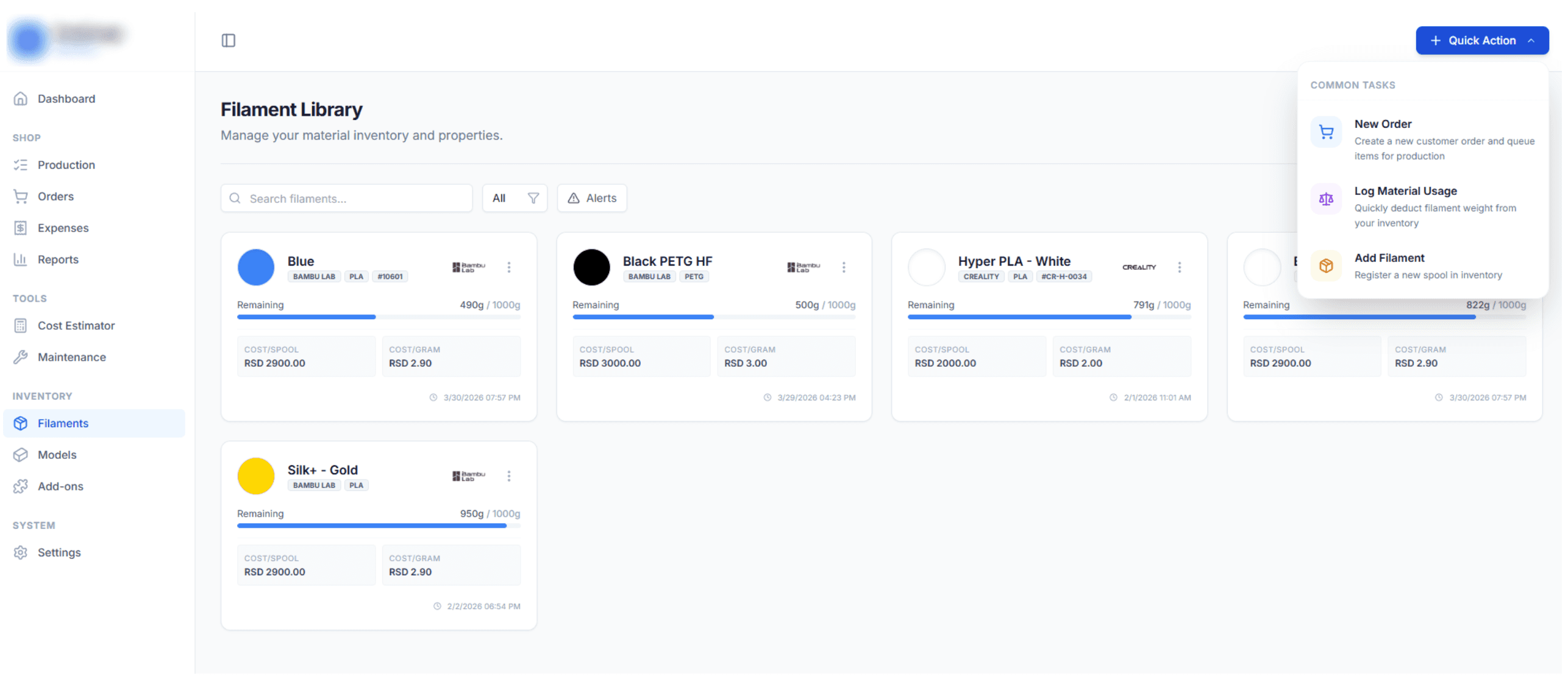
The client had a problem: managing a multitude of printers, tracking inventory materials, orders, and finances had become chaotic. A large part of the tracking was done through notebooks and Excel sheets. A traditional agency would have taken months to develop such an ERP system.
What we did using Google AI Studio and the Vibe Coding approach:
Analytics Dashboard: A central brain of the system was created that tracks the performance of each printer in real-time.
Inventory & Order Management: The process from the moment of ordering to deducting materials from inventory was automated.
Operation Management: We integrated logic that optimizes the print order to maximize profit.
Result? A complete, functional system was delivered in less than a month.
Instead of spending weeks writing specifications for programmers, I, as a designer, used Google AI Studio to directly generate logic and connect the database. The focus was on how the user interacts with the system, not how the code looks "under the hood." This is proof that the "vibe" approach enables the creation of serious enterprise tools in record time.
VERY IMPORTANT THING - When developing this software, AI and vibe coding were used to validate the idea, to see what is actually useful in the application, what will be used the most, and what can be set aside. The program is used internally, thus it is perfect for testing. The moment the program becomes commercially available, a team of programmers should certainly be engaged to eliminate the shortcomings of vibe coding and optimize the application itself in a traditional way. Having the foundation of the program itself reduces the time and resources needed to create a commercial final product.
Why UX is key to successful AI code
There is a misconception that AI can create an application by itself. If you give the AI poor instructions, you will get bad software - just faster than before. This is where the UI Designer steps in.
Designers are trained to think about the user. They understand information flows, color psychology, and the importance of an intuitive interface. When a designer uses vibe coding, they deliver not a static picture that a programmer may or may not interpret well, but living code.
Bridging the "Telephone Game" Gap
In a traditional process, the designer says: "I want this button to have a smooth animation and open this menu." The programmer responds: "That is too complicated for this sprint."
With vibe coding, that conversation doesn’t exist. The designer implements the animation through dialogue with the AI. They have complete control over the "last millimeter" of the user experience. This results in a product that not only works but feels premium - which is crucial for attracting early users.
The technology stack in 2026
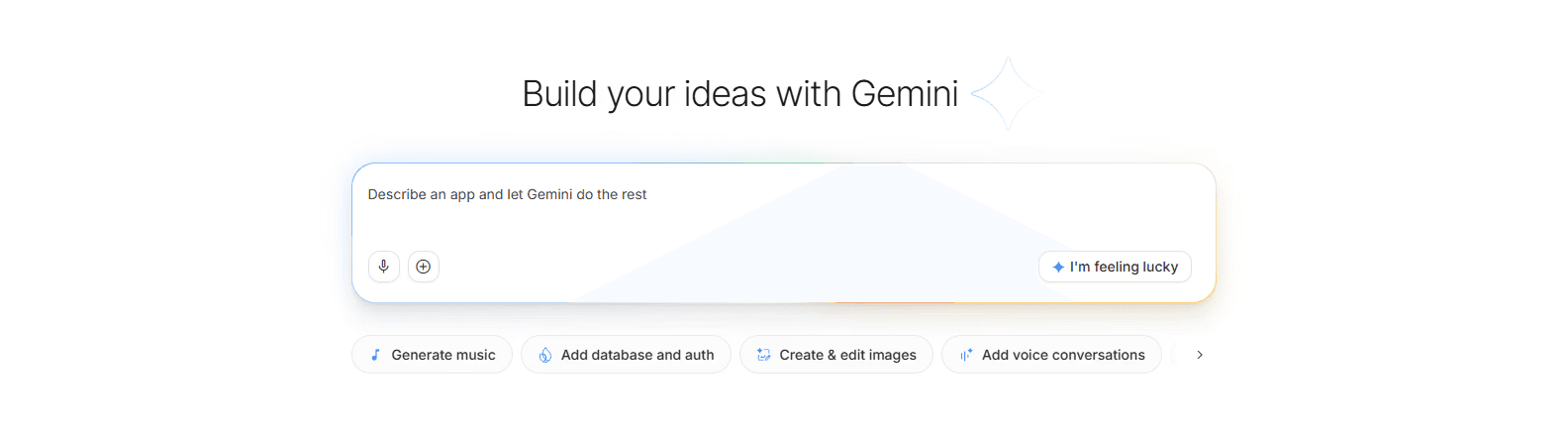
The AI builder market has exploded, reaching a value of over 4.7 billion dollars. As a designer, I choose tools based on the specific needs of the project, but here are the leaders that allow for the speed we've talked about:
Lovable & Bolt.new: These tools allow for the creation of polished applications with databases directly from the browser. An idea is turned into a URL in less than 30 minutes.
Replit Agent: Your digital worker that can autonomously set up servers and integrate payment systems like Stripe.
v0 by Vercel: Ideal for generating top-notch UI components that look like they were made by a Silicon Valley team.
Cursor & Windsurf: When a prototype needs to grow into a serious product, these editors allow us to clean and optimize code at lightning speed.
The "Vibe & Verify" Strategy and How to Avoid Pitfalls
Speed is great, but it must not come at the expense of security. As someone who leads this process, I apply a strict "Vibe & Verify" strategy:
Audit critical paths: Although AI writes 95% of the code, the 5% related to money and private data always goes through rigorous human review.
Managing technical debt: AI code can become messy if not managed properly. The key is to establish a clear architecture from the start, which is the task of the designer as the system architect.
Agent testing: We utilize other AI agents whose sole job is to try to "break" the application and find bugs before your users do.
SEO in the era of generative search (GEO)
Your product needs to not only work but also be found by people. In 2026, Google’s search has evolved into AI Overviews (SGE). To make your product visible, it's no longer enough just to have "keywords."
It is necessary to create content that demonstrates real experience (Experience). That is why case studies, like this one about the 3D print farm, are crucial. AI search engines favor content that offers unique data and proven expertise.
Additionally, vibe coding allows us to incorporate interactive elements on your website - calculators, small tools, or simulators - that Google's algorithm favors because they provide direct value to the user, which ordinary text blogs cannot replace.
Your idea no longer waits for a budget
The barrier between "I have an idea" and "I have a product" has never been smaller. Vibe coding has democratized software development, empowering creatives and visionaries to bypass slow and costly engineering cycles.
If you have a vision, do not wait to gather hundreds of thousands of euros for development. You need a partner who understands both design and technology - someone who can "vibe out" your prototype and turn it into reality while your competition is still writing documentation.
The world is changing. You can be part of the old model that spends money, or the new one that builds the future.