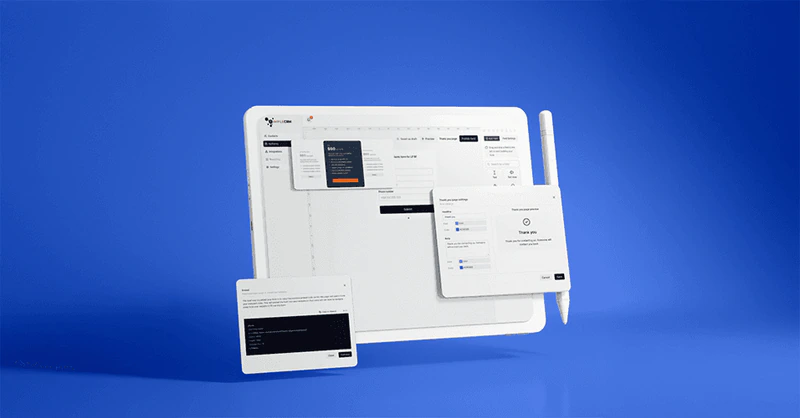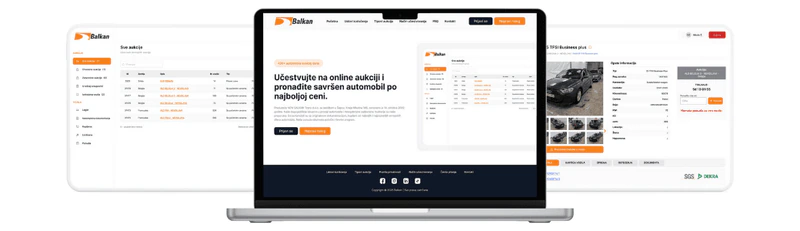
UX/UI design
- Intuitive design
- A modern and attractive interface in line with the brand
- Optimized flows for better conversion
- Digital experience that users return to
About the service
The way users experience your website or application directly affects their first impression of your brand. Professionally crafted UX (User Experience) and UI (User Interface) design are not just visual elements; they are the key to a simple, intuitive, and pleasant use of your digital product.
The UX/UI service combines aesthetically appealing design with functionality. Through careful research of user needs and behavior analysis, I create solutions that:
- Increase user engagement and satisfaction
- Simplify navigation and interaction flows
- Strengthen brand recognition and value
- Increase conversions and business results
Whether you need a completely new design or an upgrade to an existing one, my goal is to create an experience that users love and gladly return to.
Contact me Research and Analysis
- Analysis of user needs and target audience
- Interviews, surveys, and user behavior testing
- Defining user personas
- Market and competition research
- Analysis of the current user experience
click to read more
1. Understanding the User
The first step is a detailed understanding of your users. This involves analyzing who your ideal customers are, their demographic characteristics, habits, goals, and the challenges they face. Through this phase, user personas are created to represent actual types of users. These personas help focus the design on their needs, rather than on assumptions.
2. Tracking Needs and Behavior
The next step is studying how users currently use your products or similar products in the market. This includes:
- Analyzing existing user flows
- Identifying points where users get stuck or lose interest
- Understanding what is most important to them and what functionalities they expect
The goal is to clearly identify problems and opportunities for improvement, so that the design is intuitive and pleasant to use.
3. Competitor Analysis
It is important to understand not only your users, but also what the competition is doing. I analyze competitor products and digital platforms to discover:
- Their strengths that should be leveraged
- Weaknesses that we can surpass
- Industry trends that can serve as inspiration
This research ensures that your platform is better, more efficient, and more attractive than others.
4. Defining Goals and Strategy
Based on the collected data, I define clear design goals. This includes:
- Increasing user engagement and satisfaction
- Optimizing the user journey and interaction flows
- Identifying key functionalities that bring value
The result of this phase is a solid foundation for UX and UI design, ensuring that every interface element has a purpose and leads to a better user experience.
5. Creating Recommendations and a Development Plan
Once the analysis and research are complete, I prepare a detailed report with recommendations. It includes:
- Design and functionality priorities
- Potential challenges and solutions
- A strategy for implementing design solutions
This helps ensure that every subsequent step in the design is logical, efficient, and based on real data, rather than assumptions.
UX design (User Experience)
- Creating user flows
- Mapping the customer journey (customer journey maps)
- Creating wireframe prototypes
- Planning and organization of content (information architecture)
- Prototyping and optimizing the experience
click to read more
UX (User Experience) design is the heart of a digital product. My goal is to make using your platform easy and pleasant for every user, while you achieve better results.
1. Planning user flows
Based on research and analysis, I create user flows that define how users will navigate through the website or application. Every step is carefully designed to be logical and simple, so that users can reach their goal quickly.
2. Creation of wireframe prototypes
Before the design gets its final visual form, I make wireframe prototypes. They represent the basic structure of the pages and functionalities, allowing for testing and optimization without wasting resources unnecessarily.
3. Customer journey mapping
I create a customer journey map that shows all the touchpoints of the user with your product. It helps us find places where users might get stuck or lose interest and improve their experience.
4. Testing and optimization
I test the prototype with real users (or with internal teams, depending on the budget) to collect feedback and find pain points. Based on the results, I optimize flows and interactions to make the experience intuitive and pleasant.
5. Documentation and guidelines
All flows, prototypes, and recommendations are documented so that development or marketing teams can easily implement the solutions. In this way, UX design becomes a practical and applicable solution.
UI design (User Interface)
- Development of the visual identity of the interface (colors, typography, icons)
- Screen design and interactive prototypes (high-fidelity design)
- Responsive design for different devices
- Creating a design system and style guide
- Enhancing the visual experience for better engagement
click to read more
UI (User Interface) design is how users experience your digital product. My task is to make the interface appealing, modern, and functional, connecting aesthetics with usability.
1. Visual Identity Design
I develop colors, typography, icons, and graphic elements that reflect your brand identity. The goal is for users to instantly recognize your brand and for the visual experience to be consistent and appealing.
2. Screen and Prototype Creation
I create high-fidelity screen designs and interactive prototypes that show how the final product will look and function. This allows you to see the solution before implementation.
3. Responsive Design
I design interfaces that work on all devices (desktop, tablet, and mobile) so that users have a great experience regardless of the device.
4. Development of Design Systems and Style Guides
I develop styles and guidelines that ensure consistency of visual identity across all pages and projects. This saves time and resources during development and maintenance.
5. Visual Experience Testing
I check how users experience the interface, identify problematic elements, and improve the visual design so that it is beautiful yet functional.
Optimization and implementation
- A/B testing of design solutions
- Continuous improvement of the user experience
- Consultations and recommendations for development
- Tracking results and performance analysis
- Implementation of user feedback
click to read more
Design does not end when a product is released. Optimization and continuous development are the keys to long-term success.
1. Monitoring user behavior
Using analytical tools, I track user interactions with the application to understand how they actually use your product. This allows me to find places where confusion occurs or where users drop off.
2. A/B testing and experiments
I test different versions of the design or functionality to find the solution that yields the best results. In this way, optimization is based on real data, not on assumptions.
3. Implementation of feedback
I collect feedback from users and teams, and then introduce improvements that make the interface more intuitive and pleasant to use.
4. Continuous improvement
I regularly review and update the design so that the user experience remains aligned with new trends, technologies, and user needs.
5. Reports and recommendations
I prepare detailed reports with analysis and suggestions for next steps. This way, you always have a clear picture of performance and possible improvements.
What you get by hiring a UX/UI designer
Unlimited number of revisions
No worries about additional costs for modifications.
More satisfied users
Intuitive and pleasant user experience.
Better conversion of users
Design that prompts users to take the desired action.
Reduction of development costs
Precise design reduces errors and rework.
Stronger brand identity and recognition
A consistent and professional visual identity.
Competitive advantage
Stand out with quality design.
Better accessibility
Design that can be used by everyone, regardless of ability.
Faster time to market
An efficient process accelerates product launch.