
There is a huge difference between an agency with a team of fifteen people and a single person working on your project. Here is what that difference means for your business.
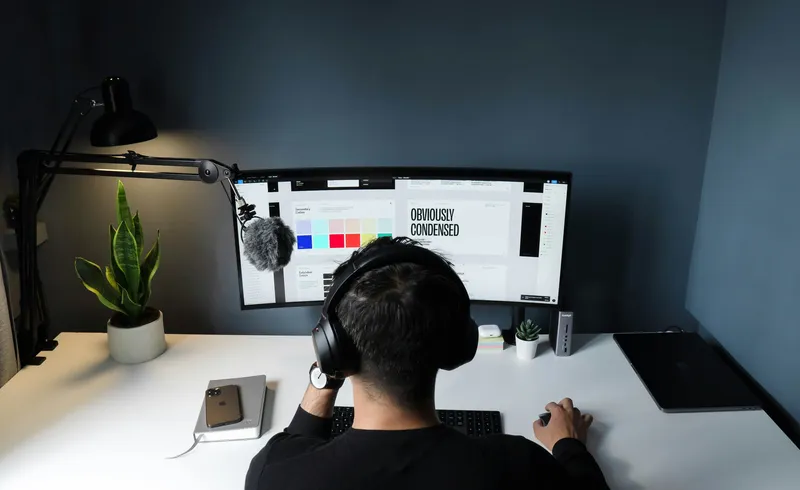
When you start looking for someone to build a website or a landing page, you stumble upon two types of providers. On one side, there are agencies with beautiful websites, long lists of clients, and teams ranging from five to thirty people. On the other side, there are freelancers—individuals who work alone and often do not have even a tenth of the marketing budget that agencies invest in themselves.
At first glance, it seems as though an agency is automatically the better choice. More people, more experience, more resources.
In reality, it is more complicated than that.
This text was written because for years I have watched entrepreneurs make the wrong choice, in both directions. Some go to an agency and pay three times more for a project that was actually done by a single employee there. Others take the first freelancer they find on Instagram because they are cheap, only to get a website that does not do what it is supposed to do.
My goal is to help you understand what you are actually choosing when deciding between these two options, what a freelancer can do that an agency cannot, where the opposite is true, and when each option makes sense for your specific case.
Who is a freelance web designer anyway
A freelance web designer is a person who works independently, without a fixed employer, and takes on projects from various clients. There is no company in the background, no team that changes from project to project, and no manager to pass information between you and the person who is actually building your website.
There is only one person. This is the person you contacted, the person who answers your questions, the person who designs your site, and the person who delivers the finished project.
In Serbia, this model of work has started to grow significantly in the last few years. Partly because digital services by nature do not require physical presence, and partly because more and more designers realize they can earn more and do higher-quality work when they do not have to attend every team meeting and defend every creative decision in front of five colleagues.
Freelancers in the field of web design most often cover a combination of the following: interface and visual identity design, building websites on platforms like Framer or Webflow, creating landing pages, graphic design for digital channels, and UX analysis and audits of existing websites.
The scope varies from person to person. Some freelancers specialize exclusively in one thing and do it better than anyone else. Others cover a wider spectrum because their clients ask for it. Neither is automatically better; it depends on what you need.
Why more and more small businesses choose a freelancer
This is not a romantic story about how freelancers work with heart while agencies do not. That is not true. Agencies can also do excellent work.
The reason small businesses and entrepreneurs increasingly choose a freelancer is much more pragmatic and comes down to a few concrete things.
You know exactly who you are working with
In an agency, the person selling you the service is almost never the person who will be working on your project. You agree on everything with an account manager, the project is assigned to a junior designer, and a senior designer might take a look at the end before delivery.
This is not a theory, but a standard operating model in agencies worldwide, for very rational reasons. Senior staff are expensive and cannot be on every project from start to finish.
The problem arises when you pay agency rates but get the work of someone who is only in their second year.
When you hire a freelancer, you know exactly whose portfolio you are looking at, you know exactly whose name stands behind the references shown to you, and you know exactly who will be sitting down and working on your website. There are no surprises in that regard.
Direct communication, no middlemen
One of the most common issues I hear from entrepreneurs who have worked with agencies is that information got stuck somewhere between them and the designer.
You send feedback to the account manager, they convey it to the designer, the designer does something, and the account manager comes back with the next version, which is not quite what you meant. This loop can go on for a long time.
With a freelancer, you speak directly to the person working on your project. If you have an idea on Tuesday morning, you can send it in a message. If something is wrong with the version you received, you say it directly and immediately. Feedback arrives without filters and without translation.
This sounds like a minor detail, but in practice, it speeds up the entire project and significantly reduces the probability of getting something that is not what you wanted.
The price is more realistic for what you get
Agencies have fixed costs that you indirectly pay for: offices, administrative staff, managers, marketing, bills. All of this is included in the price of your project, even when none of it directly contributes to the quality of your website.
A freelancer does not have these overhead costs to the same extent. This does not mean they are automatically cheap: a high-quality freelancer worth hiring will not be the cheapest option on the market. But it means that what you pay goes directly into the work on your project, not into covering the company's operating costs.
For the same budget, you can get more attention, more iterations, and a better result from a good freelancer than from an agency in the same price range.
Flexibility that is not possible in a corporate structure
Agencies work according to a process. Every project goes through defined phases, defined revisions, and defined deadlines for feedback. This is useful for the agency because it allows them to manage multiple projects in parallel.
For you as a client, this can be limiting. If the situation changes in the middle of the project, if you realize you need something different from the original plan, or if an urgent matter arises, the agency's process cannot always absorb it without extra costs and delays.
A freelancer has the freedom to adapt. If you come with a change during the project, the conversation is between the two of you and is resolved without formal processes that slow everything down.
Where agencies have the advantage, to be fair
It wouldn't be fair to only praise freelancers and skip the situations where an agency actually makes sense.
If you are working on a large project that simultaneously requires design, development, content writing, SEO strategy, and marketing integration, a single person cannot cover all of that to the same extent as a team. A freelancer trying to be everything to everyone ends up not being good enough at anything.
If you need a team that can react within an hour and has organized support for urgent technical issues, an agency can guarantee this more easily than a single person.
If you work in a corporate environment where procurement must go through a formal approval process and where contracts, SLAs, and formal VAT invoicing are required, some agencies are better equipped for that administrative framework.
And if the prestige of the vendor is important to you, an agency with a well-known name and a client list that includes big brands carries a different weight in internal presentations.
For a small business and an entrepreneur who need a specific website or landing page, these reasons mostly do not apply. But they are worth knowing.
Freelancers, by the way, are not hired only by entrepreneurs. Agencies also regularly call them when they need reinforcement, and I wrote about that in the text when an agency needs an external designer.
How to know if the freelancer in front of you is trustworthy
This is a question that deserves an honest answer because not every freelancer is equally good, just as not every agency is.
Look at the portfolio with skepticism
Beautiful pictures are not enough. Ask if you can visit the websites they have built. Click, scroll, check how they behave on a phone, and see if they load quickly. A design that looks beautiful in a screenshot often does not reflect how the website actually functions.
Ask for references you can contact
Every serious freelancer has clients who are satisfied and willing to confirm it. If they have none, that is a red flag.
Check if they understand your business before they start talking about design
A good designer will ask you who your clients are, what you want to achieve on the website, and what is not working with the current state. A bad designer will immediately start talking about colors and fonts.
Pay attention to communication during the negotiation process
If they respond slowly, unclearly, or avoid concrete answers before the project starts, that is exactly how the collaboration will look.
Ask what happens after delivery
Who owns the files, how does support work if something stops working after launch, and what are the conditions for revisions.
What concretely you can get from a freelance web designer
When talking about what a freelancer can do for your business, the answer is not abstract.
You can get a website designed for a specific goal, not a generic presentation. The difference between a website that just exists and one that brings in inquiries lies in whether someone thought about what visitors do on the site and what you want them to do.
You can get a landing page that has been tested to see if the message makes sense for a person coming from a specific traffic source.
You can get a visual identity that is not a bundle of cheap clipart elements pasted together, but a connected visual system that works on the website, on social media, and on everything you communicate externally.
You can get a UX audit of an existing website that tells you concretely what is not working and why, without someone trying to sell you a redesign you might not even need.
And you can get all of this from a person with whom you have a direct relationship and who understands the context of your business better than a team that saw your brief for the first time two weeks ago.
Freelance work in Serbia today
In Serbia, the freelance market for digital services has grown significantly in recent years. It is no longer rare for a designer with a solid portfolio to work exclusively for international clients and earn more than they ever could in a local agency.
This has a direct consequence for you as a client: freelancers who operate in the Serbian market and choose to work with local businesses do so for a reason. Either the local context suits them, they want to build a local portfolio, or they prefer to work with entrepreneurs who understand the Serbian business landscape.
This choice means you get someone who has consciously decided to channel their energy there, which is a different starting point compared to an agency that accepts every project that comes its way.
Platforms where you can find freelance web designers in Serbia include LinkedIn, Behance, Instagram, and local entrepreneur groups. But before you start searching, it is useful to know what you are looking for, because it is easy to fall into evaluating based on who has a nicer Instagram profile instead of who actually does a good job.
A practical tip for the end
If you are an entrepreneur thinking about a website, a landing page, or a redesign, and you are not sure whether you need a freelancer or an agency, answer the following questions for yourself.
What is the scope of the project? If it is relatively clear what you need and the project has a defined end, a freelancer is almost always the better choice for that size of job.
How important is direct communication to you? If you have many specific requirements and it is crucial that each one is correctly understood, a freelancer gives you a direct channel without intermediaries.
Is price an important factor for you? A freelancer can offer a better value-to-price ratio for small and medium-scale projects.
Do you need someone who also understands your business, not just design? A good freelancer who has experience with small businesses will understand why the website exists and what it needs to achieve, not just how it should look.
If you answered yes to three out of four questions, you know which direction makes sense for you.
One example of my work is the Marketit agency website.
Before your first conversation with a designer, also take a look at what you need to prepare before ordering a website. Good preparation shortens the project timeline and reduces costs.